


AVANT-GARDE ART and the new wave of Art Critics
SEARCH AND DESTROY!
AVANT-GARDE ART
and the new wave of Art Critics
Art is part of the American Dream. The practical appearance of this dream began in a spirit of hope. Much American art at the turn of the 20th century and through the 1920s, from the paintings of Charles Sheeler to the poetry of Hart Crane, hymned the power of the new technology, the free inspiration, and the dream of a new common culture.
By the middle of the century, however, many people recoiled in dismay at what had happened to the American arts, high and low, and thought that these old dreams of a common, unifying new culture had been irrevocably crushed. Destroyed. The new technology of mass communications, for the most part, seemed to have achieved not a generous “democratization” but a bland homogenization of culture.
Many people thought that the control of culture had passed into the hands of advertisers, people who used the means of a common culture just to make money.
It was not only that most of the new music and drama that had been made for movies and radio, and later for television, seemed shallow; it was also that the high or serious culture that had become available through the means of mass reproduction seemed to have been reduced to a string of popularized hits, which concealed the real complexity of art.
Culture, made democratic, had become too easy. This new era completely destroyed the true Avant-Garde in Art.
New York’s Avant-Garde: A Post-War Cultural Revolution
As a consequence, many intellectuals, and artists around the end of World War II began to try to construct new kinds of elite “high” culture, a very new Avant-Garde art that would be deliberately difficult.
Much of the new art and music and poetry etc. seemed puzzling and deliberately obscure. Difficult art happened, above all, in New York City.
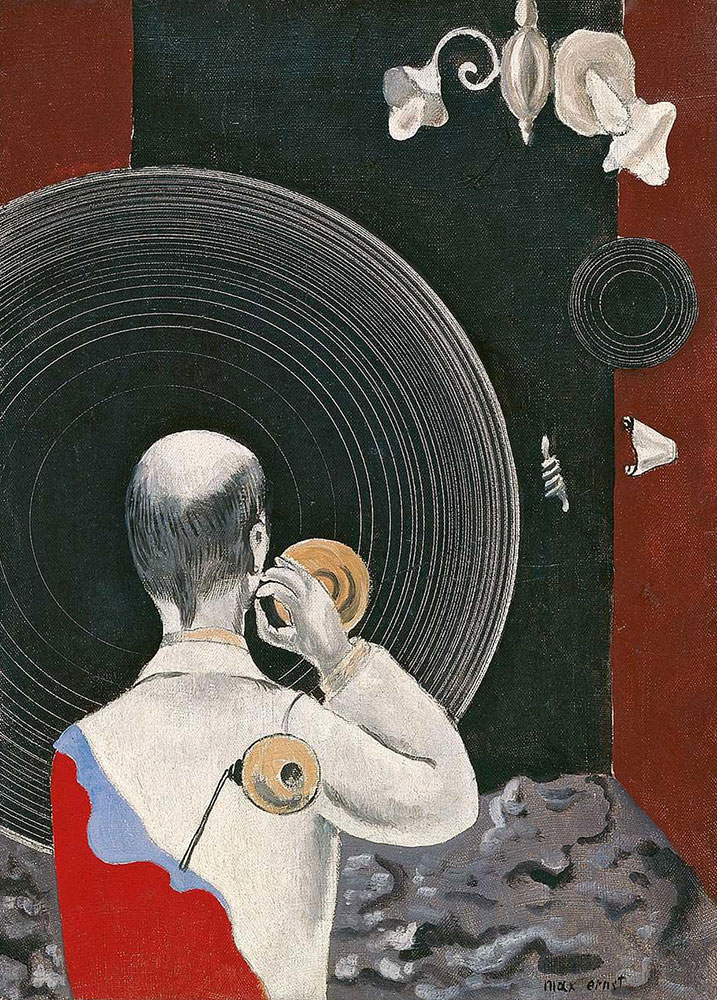
At the 1940’s New York had seen an influx of avant-garde artists escaping Europe, including the painters Max Ernst, Piet Mondrian, and Joan Miró, as well as the composer Igor Stravinsky. They imported many of the ideals of the European avant-garde, particularly the belief that art should always be difficult and “ahead of its time.”
It is a paradox that the avant-garde movement in Europe had begun, in the late 19th century, in rebellion against what its advocates thought were the oppressive and stifling standards of high, official culture in Europe. It had often looked to American mass culture for inspiration.
In the United States, however, the practice of avant-garde art became a way for artists and intellectuals to isolate themselves from what they thought was the cheapening of standards.
But what were the standards? There had to be a new wave of art-criticism to create (or to observe) these new standards. But that was a difficult task, because, first, critics should learn to understand the new Avant-Garde, the frontiers, and the pioneers of the exploration of arts in the new media.
-
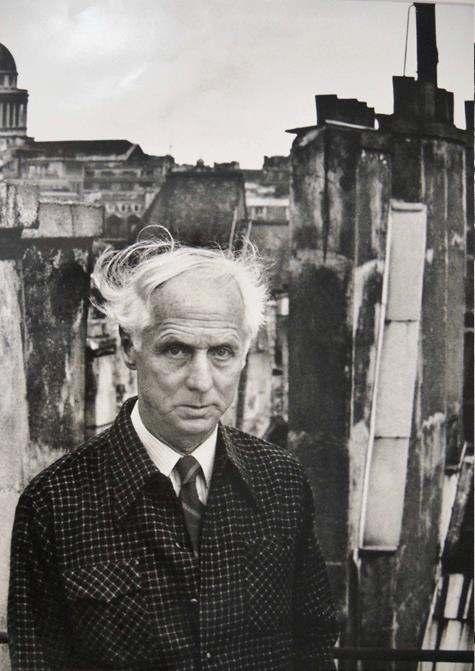
- Max Ernst
-
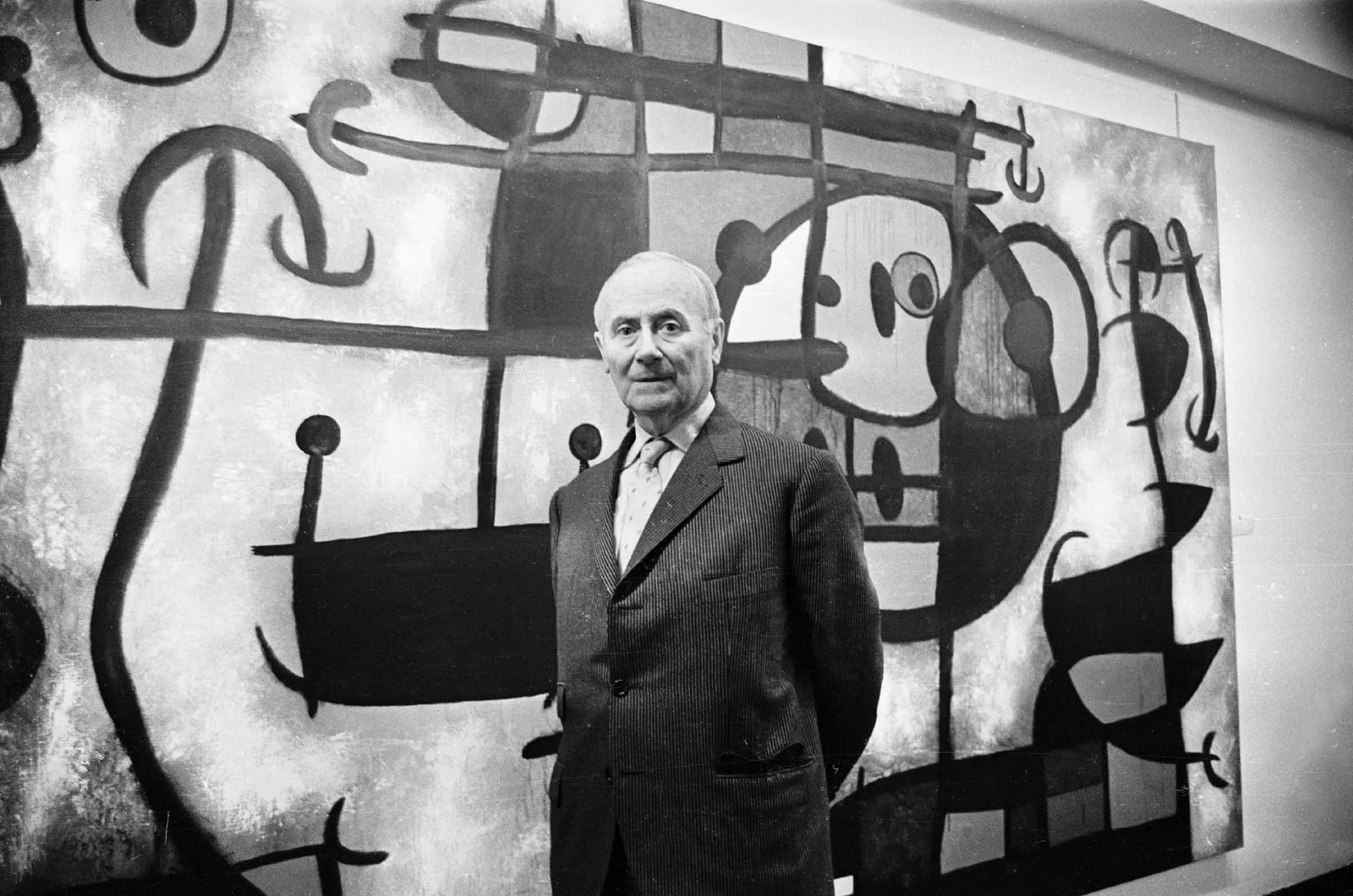
- Joan Miró photographed in front of his painting The Ski Lesson. Robert Stiggins—Hulton Archive/Getty Images
-
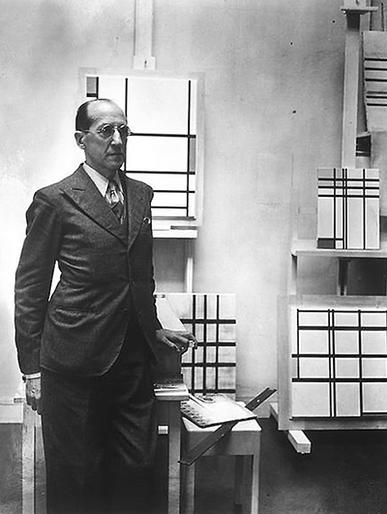
- Piet Mondrian
-
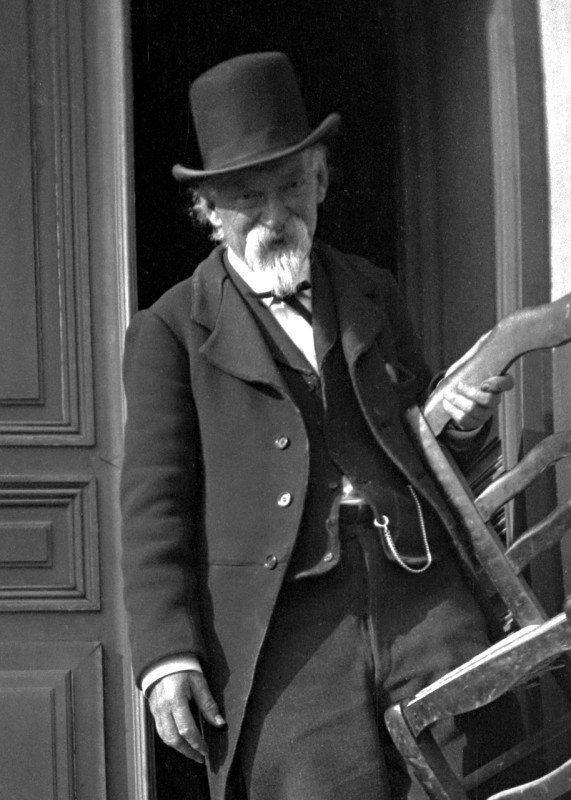
- Paul Cézanne
-
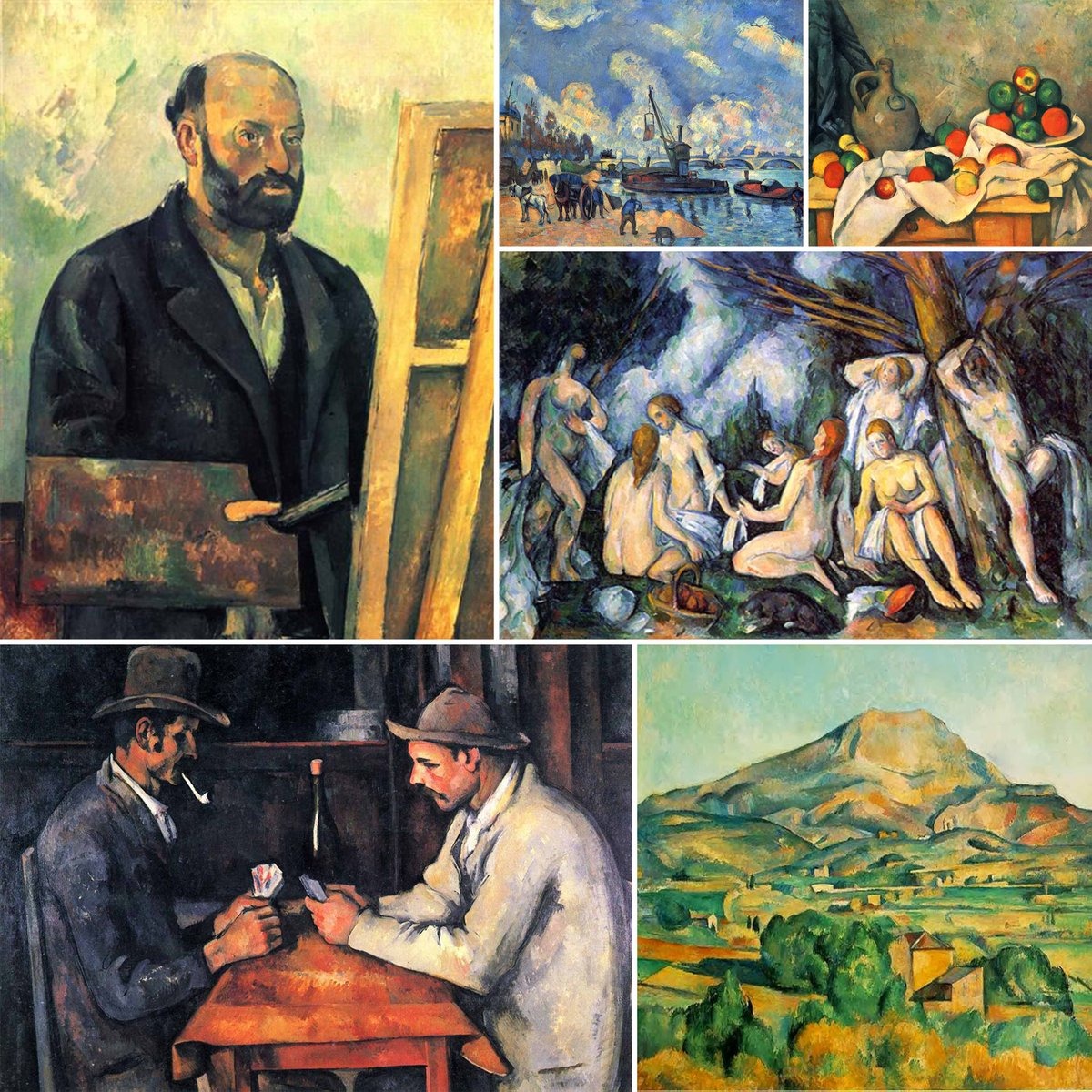
- Paul Cézanne works
-
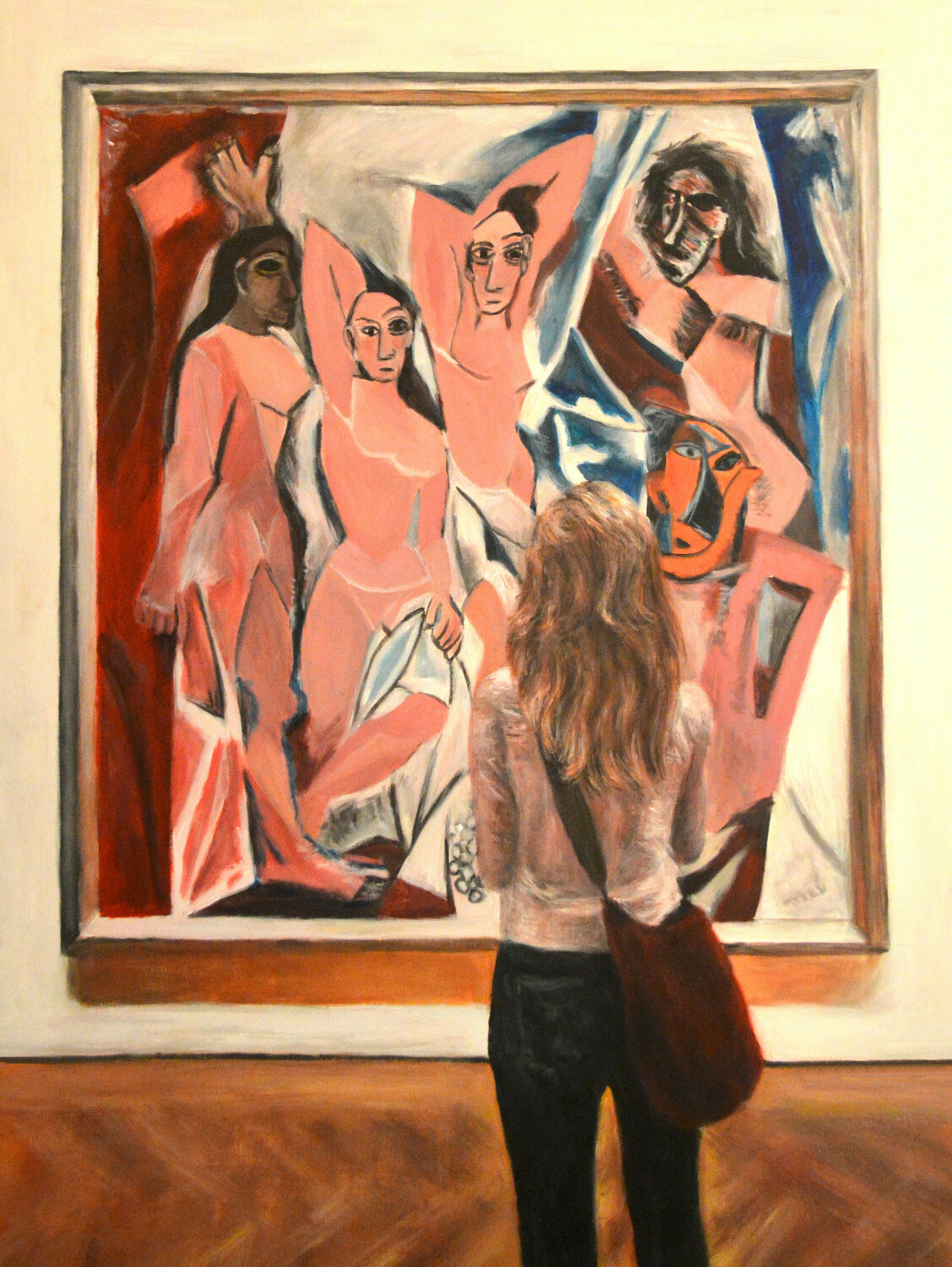
- Picasso – Les Demoiselles d’Avignon
-
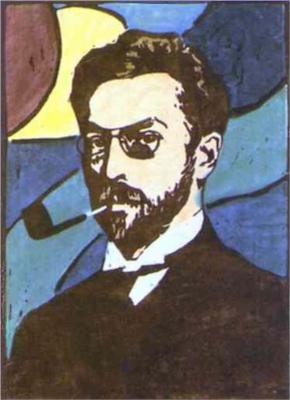
- Portrait of Wassily Kandinsky – Gabriele Münter
In the late 19th and early 20th centuries, many critics continued to grapple with the newness of the generation of artists inspired by Impressionism. This started with the work of Paul Cézanne.
The work of Post-Impressionist painter Paul Cézanne made the avant-garde problem become even more explicit to critics. Major Critic Roger Fry, who gave Post-Impressionism its name, regarded Cézanne as the founder of a new Modernist aesthetic—a new formalism, in which, as he wrote in Vision and Design (1920), “plasticity has become all-important” and in which “all is reduced to the purest terms of structural design.”
Another early advocate of Modernism, the German critic Julius Meier-Graefe, described Cézanne’s paintings, in Entwickelungsgeschichte der modernen kunst (1904; Modern Art: Being a Contribution to a New System of Aesthetics), as “mosaic-pictures…amazing in their vigorous contrasts of colour,” which “may be compared to a kind of kaleidoscope,” and noted that “the effects he produces are primitive.” Fry made the same point, noting in Vision and Design that Cézanne’s new kind of painting “reduced the artistic vision to a continuous patchwork or mosaic of coloured patches without architectural framework or structural coherence,” which nonetheless conveyed “the totality of appearance.”
This increasing acceptance of abstraction set the stage for the critical shake-up caused by Pablo Picasso, who was the revolutionary, “critical” artist of the early 20th century. Gauguin had already made use of Polynesian figures and myths, but the ironic idea of the so-called primitive look as an advanced look—a radical new departure, which was in fact an extension of Western colonialism as well as a kind of nostalgia for a period before modernity, when humans were imagined to have lived more spiritually and in line with nature—took off with Picasso’s use of African masks in the proto-Cubist masterpiece Les Demoiselles d’Avignon (1907).
In this work the Cubist reduction of human form to simple geometry was already apparent, as the flattening of the figures—inspired by the flat masks—indicates. The art of non-Western and nonindustrial cultures such as those of Africa was appreciated by Western critics for its seemingly pure plasticity; this seemed novel to European artists and critics eager to break with tradition and make a new art for a new century.
In 1908, in his essay “The Three Plastic Virtues,” poet and critic Guillaume Apollinaire argued that “the three plastic virtues, [of] purity, unity, and truth” had “triumphantly vanquished over nature” in Cubism. His assertion was the final stamp of approval on the new School of Paris, led by Picasso. Pure plasticity—the aesthetic “truth,” as it were—was expressed, if in different formal terms from those of Cubism, in the abstract expressionism of Wassily Kandinsky, the leader of Der Blaue Reiter (“The Blue Rider”) artists in Munich, in Kazimir Malevich’s Suprematism, in Russian Constructivism, and in the geometric abstraction of Piet Mondrian and Theo van Doesburg of the Dutch De Stijl group.
After this, the concern with pure plasticity—color, surface (texture), line, rhythm, shape, and mass and the seemingly accidental yet unexpectedly harmonious relationship between these “formal facts” of the medium, as Clement Greenberg would one day call them—became the hallmark of Modernist, or formalist which would dominate and guide the direction of much art in the 20th century.

Dadaism’s and Surrealism’s use of automatist spontaneity, chance, and accident influenced the formal experiments of a generation of artists, particularly those of the Abstract Expressionists.
Despite the conceptual nature of their critical statements, therefore, these movements resisted being easily categorized as purely formal or conceptual. The dual paths these movements embodied—art oriented toward formal innovation and expression versus art oriented toward conceptual aims—would remain central to the major approaches to critical practice and art making throughout the 20th century.
As the century progressed, art criticism grew in part because of the explosive growth of avant-garde art but also because the new art became newsworthy enough to be covered by the media, especially when big money invested in it. The New York Armory Show of 1913 made a big public splash—U.S. Pres. Theodore Roosevelt visited it and remarked that he preferred the Navajo rugs he collected to the abstract art on display.
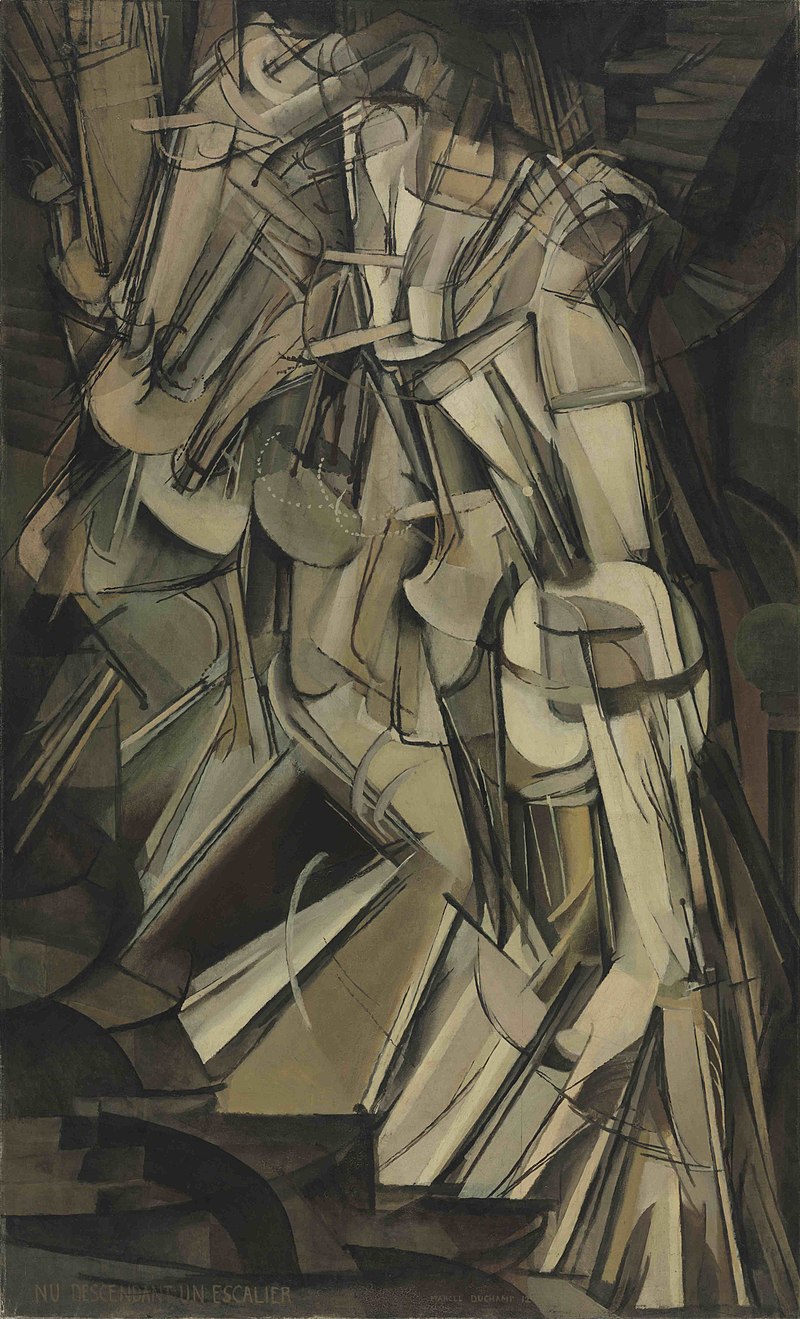
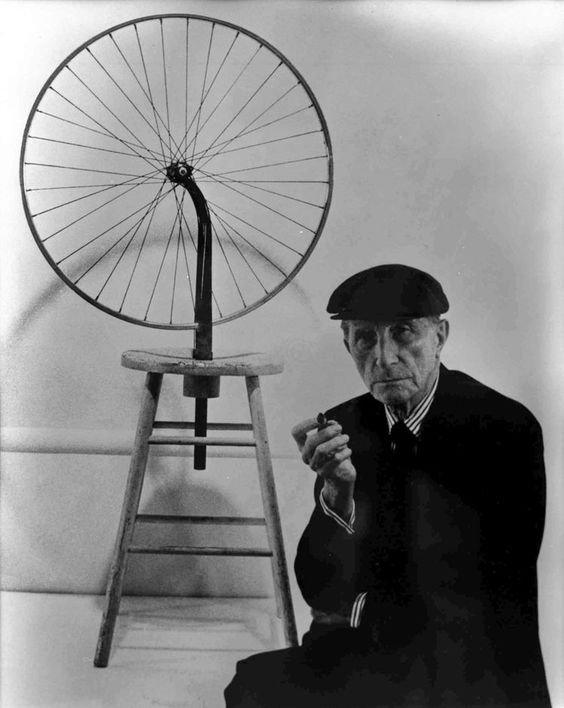
Reaction to the work was generally mixed. Peyton Boswell, writing in the New York Herald, described Marcel Duchamp’s controversial painting Nude Descending a Staircase, No. 2 : as a “cyclone in a shingle factory.” Yet the millionaire Walter Arensberg supported Duchamp, a gesture that was a harbinger of the coziness that would develop between art and money, fueled in part by the possibilities of speculation in the unregulated art market.
Major private collections of avant-garde art emerged—perhaps most note-worthily that of Albert C. Barnes—a now legendary collection, further legitimating it.
The founding of the Museum of Modern Art in New York City in 1929 under the auspices of the Rockefeller family was the consummate sign of the social and economic success of avant-garde art. Under the leadership of Alfred H. Barr, Jr., the museum mounted a series of now classic breakthrough exhibitions, although Cubism was singled out as the particularly seminal movement.
The point was clearly made in Barr’s diagram of the development of avant-garde art through 1935: “Cubism,” in the largest letters, has pride of place. According to the diagram, Cubism derives from Cézanne, Neo-Impressionism, and Henri Rousseau and leads directly to Suprematism, Constructivism, and De Stijl, finally leading to abstract art. This became the orthodox formal high line.
German Expressionism, Dadaism, and Surrealism are shunted to the side, falsifying their influence and significance. So, these art movements were the most revolutionary of all.
Today Barr’s diagram looks academic and prejudiced, showing the limitations of a one-dimensional reading of avant-garde art privileging the formal. Again, the power of an institution to dictate and legislate art history is clear: Barr was in effect a modern Le Brun, and the Museum of Modern Art became the avant-garde academy, seeming to have more authority than the art itself.
The formal abstraction initiated by Picasso and the Cubists reached its extreme in the emergence of the avant-garde American art, Abstract Expressionism, in the 1940s. The New York Times and Time magazine began to cover art events, often in controversial depth…
Abstract artists themselves became critics in an attempt to clarify and justify their work. A decisive moment occurred in 1943, when Adolph Gottlieb and Mark Rothko wrote a “Statement” in the Times in response to their critics “nonplussed” response to their “‘obscure’ paintings.” As they said, “The artist’s complaint that he is misunderstood, especially by the critic, has become a noisy commonplace,” so that the artist has to become his own critic.
Another important event occurred in 1961, when critic Canaday’s “insulting” views on contemporary art—he regarded the Abstract Expressionists as fakes—were attacked in a letter signed by a number of artists and cognoscenti who defended it. The issue of this exchange is not whether Canaday was right or wrong, but rather the seriousness with which his views were taken. This indicates that criticism had become an indispensable part of the art scene – and as controversial as the art with which it dealt.
“Dada applies itself to everything, and yet it is nothing„
Tristan Tzara


By the end of the 20th century American Hilton Kramer, former major art critic for The New York Times and editor of the conservative periodical The New Criterion, remained the one major convinced Greenbergian. Prized American critic Barbara Rose, she wrote that “art criticism is no science; very little that can be said about an art work is verifiable” and “very little that is verifiable is relevant to a discussion of art.” Finding no “tradition of criticism within which to operate” after abandoning formalist criticism or any “new terms and concepts to meet the new situations artists present,” Rose more or less gave up on art criticism, apart from desultory commentary on stray artists. She was in effect tired of the new, which she did not find particularly newsworthy.
“The new new is repetitive and boring, the old new is what mattered at the end…”
The art process took the hermetic quality of formalism when a critic explored the use of theory involving language and semiotics, as did Krauss, for example.
Also, political content also directly entered the critical approach of modern art in the Marxist critiques of art historians/critics, for example: John Berger, T.J. Clark, and Benjamin Buchloh. It can be didactic, dogmatic, intolerant, and forced – a polemic against capitalism, etc, a totally wrong approach to the world of the Avant-Garde.
Journalistic criticism—reportage about art, with a sprinkling of opinion—continued to exist, more or less as it had throughout modern history. In the last two decades of the 20th century, the most visible journalistic critics—their visibility had in large part to do with the magazine or newspaper they wrote for—were Robert Hughes (Time), Michael Kimmelman (The New York Times), Kim Levin (The Village Voice), and Robert Pincus-Witten (Arts Magazine), among others. (Not to mention fringe magazines like Juxtapoz or Dazed and Confused, etc). None of them had a distinct point of view, but rather they commented on the art randomly available to them in galleries and museums, taking their lead from institutions rather than being guided by a single theory. Institutionalized Art is in fact what they are observing!
Some avant-garde critics’ perceptions were dominated by their devotion to one kind of art—e.g., Nicolas Calas, who tracked Surrealism through all its contemporary permutations. Many artists also wrote criticism to advocate their own kind of art at the expense of other art, including Donald Judd and Patrick Heron. And many artists produce art just for the criticism it will collect.
Postmodernism, the dark but reigning ideology of critical debate at the end of the century, claims that there is not a single, objective set of values or perspectives, but instead a plurality of perspectives. But this is a radical sociological view, in concern only of social groups and the mania of referring to power and authority. Just to rule out the individual in the Art. The “Authenticity” factor.
A new philosophical criticism emerged in the person of American critic Arthur Danto, who came out with the idea that “the objects of art approach zero as their theory approaches infinity”—that is, “art really is over, having become transmuted into philosophy.”
This Hegelian notion gave pride of place to conceptual art, making all art seem conceptual, and gave traditional philosophizing about art a contemporary focus.
A new psychoanalytically oriented criticism emerged in the person of this author, American critic Donald Kuspit (formally trained in philosophy, art history, and psychoanalysis, all of which he integrated in his work), who, like the English art critic Adrian Stokes, used object-relational ideas to examine art in emotional depth, in agreement with Ernst Cassirer’s view that all forms are inherently expressive and symbolic. Art critically speaking, this author (who has written a book on Greenberg), follows in Rosenberg’s steps in his concern with the state of the self in art.
In contrast to both of them, the American artist-critic Douglas Davis put technology before aesthetic form, arguing for its enormous influence on modern art.
American critic Dave Hickey argued for a “return to beauty” in art. And English critic Peter Fuller offered a psychoanalytic interpretation of abstract art even as he advocated political art.
At the onset of the 21st century, art criticism can now evoke elements of the formal, psychological, moral, social, and spiritual. Of course, the 21st century brings a variety of social, economic, and technological changes that ancient people could not have anticipated, which no doubt will continue to inspire new methods of criticism.
It is impossible, in the new century, to privilege one mode of criticism over the other—to do so is to turn it into a prejudice in favor of a particular kind of art. The impossible task of completely understanding the Avant-Garde in the arts, is best left to the ideal Oscar Wilde described in “The Critic as Artist” (1891): “..the critic who regards his craft as the grandest art of all!” Actually, this is a preview of The Portrait of Dorian Gray. Meta-egoistic narcissism of art-attorneys, against the inspired artists of the artistic front line, or maybe some not against them, but with them, to win with them the publicity and the respect they have.
The new art-critic command was always thus:

Leave a Reply